
Screamed at in 3 Languages - Under Fire in Hobart
The Half-Time Hooter: Chaos on Cue
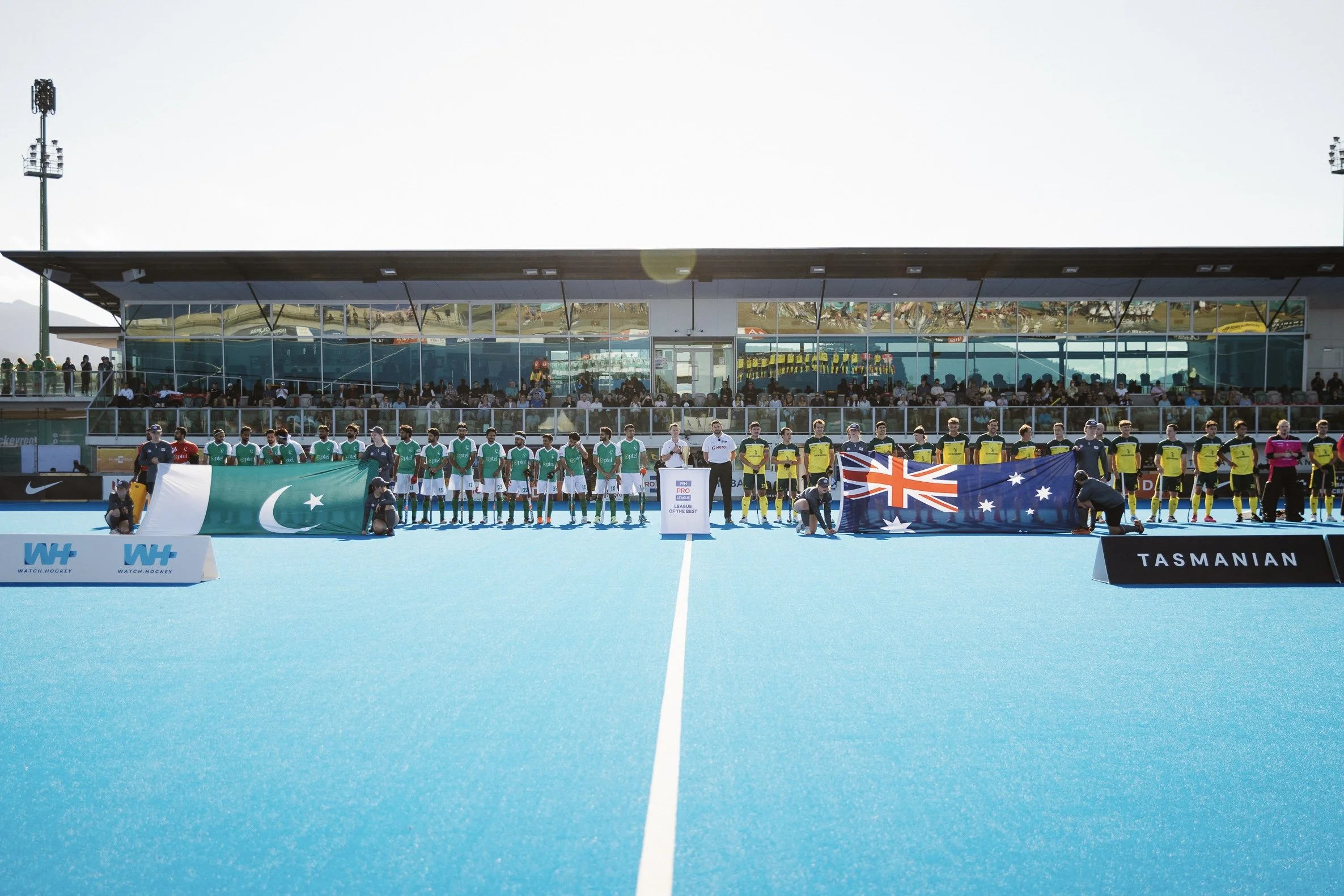
The hooter finally blasts to end the first half of my final match. Hobart's Tasmanian Hockey Centre is electric. A record home Pro League crowd well over 2,500, sun beating down in February Australian summer, cameras rolling from every angle. Three of the world's best eight teams battling in a tightly fought series, these two are top-4 contenders with Olympic qualification on the line. The coach reminded us of this after the first match.
Scores locked at 2-2. One goal heavily disputed, multiple high-profile on-field calls reviewed and flipped by our teammate in the video box. Both teams pulling every string: tactical protests, constant sideline pressure on us officials, leveraging past series grievances, even diving to milk penalties.
Walking off the pitch toward the dressing room, a player steps right up, coach right behind - confronting us again about a call. Voices raised, gestures sharp. We shake them off professionally, but the tension lingers. Everyone regroups. In our umpires' room, sweat pouring, air thick with heat and adrenaline, our coach cuts through: "How do you feel?"
Instantly, with no restraint, I respond: "Under pressure.
The Lightning Bolt Moment
Saying it out loud "I feel under pressure" was like flipping a switch. The fog of doubt cleared instantly. All the protests, the challenges, the yelling from the benches, the dramatic sideline theatre, the ohhs and ahhs from the stands.
My own advice rings in my ears: They're not attacking me. This is high-stakes elite sport.
Teams are trained to manipulate every possible angle for advantage:
Delay tactics
Verbal barrages
Questioning critical decisions
All part of attempts to unsettle officials and disrupt matches that aren't going their way.
And honestly? If I swapped places with them: Down a goal, season or Olympic qualification slipping away - I'd be doing the same. Every lever pulled. Every protest perfected.
Hell, I can barely keep my lid in a social summer hockey game!
Expecting that noise removes the surprise element. It strips away the self-imposed extra pressure I add by taking it personally. The real pressure exists - High stakes, split-second decisions under global scrutiny and assessment, but adding it unnecessarily isn't helpful.
After the dust had settled. I've been able to land on these three big learnings:
1. Trust is built through elite-level accuracy
There’s no substitute for getting the call right, and we learn this the hard way.
Accuracy on the world stage is the result of doing the hard yards long before you step onto the pitch. Knowing the rules, analysing video, maintaining fitness, and mental focus.
When the crowd and benches are roaring and the stakes are Olympic-sized, my internal peace of mind comes from knowing I've done the work and applied the necessary structured effort.
I can't control how my decisions are received or judged, but I can stick to my preparation and apply my knowledge as consistently and as accurately as I can.
Deep down, I know that that’s all anyone can ask of me. But the reality remains - We must be accurate to a high performance level.
2. Sometimes You Won’t Win Over a Frustrated Player or Team.
We must acknowledge that players and coaches have one single thing on their agenda at the world level - Winning. Their professional careers literally depend on it.
There aren't participation awards, nor does everyone get a prize.
Teams are trained, and practice manipulating every possible angle for their advantage, which includes verbal challenges and tactical protests designed to unsettle officials.
By accepting that not even every CORRECT call will be appreciated, I recognise that their frustration is a reaction to the high-stakes nature of the environment we're in.
And sometimes, I just need to accept that they are allowed to be pissed with me.
3. As Officials, we have to make the first move
Reflecting on two exchanges I had in Hobart: One, with the Australian Head Coach, and the second with one of the top players in the world from Germany, came this insight:
Whether it’s before or after a game, pitch-side, or breaking the ice in the hotel, initiating professional and friendly conversation helps move relationships beyond the charade of sideline theatre and post-match handshakes.
Making the first move opens the door to me living by my values and what it means to be a Kiwi: Being confident without arrogance and earning respect through openness and vulnerability.
These, to me, are small acts of unconventional leadership.
Final thought
Pressure isn't to be feared, whether it's sport, business, or keeping your cool through a 2-year-old toddler meltdown. The protests, the stakes, the self-doubt - they're not accidental, they're meant to be there.
When the pressure peaks - We must choose to walk toward it.
Do you agree?