
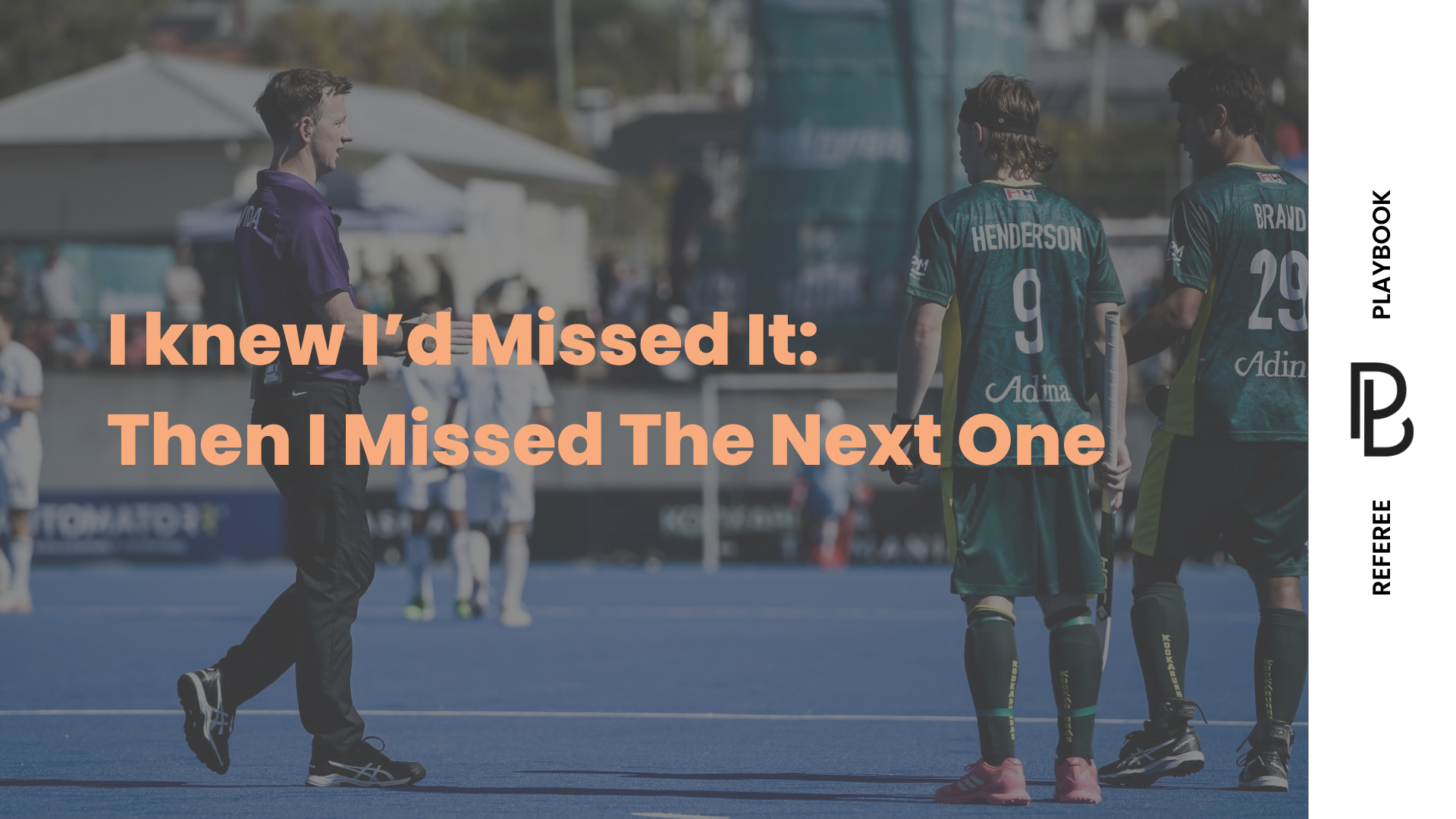
I knew I’d missed it. Then I missed the Next One!
The invisible game inside the game - Practical tools that keep you in the moment.
The Regret and Worry Loop
What is the difference between regret and worry?
I’m on a tough local derby match between rival teams. The home team knocked the away out in the semi-final last year, and it’s the first time they’ve clashed since that match.
The first goal is for the home team, and there is a firm reaction from the away defenders who challenge the goal decision, screaming for an obstruction on their keeper.
Their appeals feel genuine, and you know one of them personally. In your gut, deep down, you know there’s a good chance you’ve missed something, but you’ve not seen it, nothing from your colleague, the goal has to stand.
Now I’m on edge. It’s going to be hard work from here. They believe one has gone against them. I start to replay the situation in my head. I also consider what I might say when challenged after the game:
How the conversation might go,
How frustrated they’ll be
I’m distracted. I lose focus.
Now I’ve missed a physical play in the midfield, and everyone is shouting.
The cycle continues! I’m in the Regret and Worry Loop.
So What is the Regret and Worry Loop?
We’ve all been there:
Regret: Kicking ourselves for a mistake we’ve made
Worry: Dreading future reactions and judgement
Snowball: Distraction -> next error -> more regret
You see this all the time with elite performance athletes and game referees alike.
But for referees, it can be heightened. We’re in high-stakes environments, isolated on the field without the shield of teammates, and put under post-game pressure in local, national, and international settings.
We all know the club team, coach, or parents on the sideline that pour on the theatrics and emotional attacks after the full-time whistle.
“Hard done by, nothing went their way, reffs had it in for them, victim mentality.”
The end result: Heightened regret and worry mean higher adrenaline and cortisol levels; meaning decreases in working memory and decision making.
The reality is a dip in the key ingredients that make good referees.
The Story That Still Stings 6-Months Later
I’ve been there myself.
The pain of one decision in a Junior World Cup semifinal Under Lights in Chennai, India. Missing an opportunity to step back from the action and make a decision that didn’t hang myself, or rule a team out from a chance to win a World Cup.
A raised ball into the circle in the dying minutes, a clash of sticks, no clear touch, potentially a foot, ball in the goal. My gut reaction in the moment was goal.
The message from the video box on review, was no advice possible.
Looking back, if only I had been able to have a slightly higher level of introspection and heightened game awareness. A long corner and a video review instead of a goal and an afterthought. Things could have played out differently.
Minor details in the heat of the moment, but oh so impactful.
So how on earth do we break the regret and worry loop?
Is there a secret sauce?
Ideas for Breaking the Loop
Many coaches will tell you, “Just focus harder” or “have a thicker skin”. This advice is bull s***!
To develop real improvement and performance at a high level over a full game, tournament, or season, there is so much more to the story.
When I started to read and research mental skills, and engage with a performance coach on how I could build them into my game, things stepped up for me significantly.
I believe it’s what separates good from very good, or world-level umpires. Ignoring the loop, trying your best, having thicker skin, or blocking feedback out are a hopeless battle.
Here are some tools that I experiment with and use in the moment while I’m out there in the heat of the battle.
Immediate Reset Techniques
“Next Play” mantra: Focus on the next decision, and then the one after that. Borrow this from elite athletes who assume errors in their game and minimize their damage. One of the best hockey umpires in the country who is on their way to the 2026 World Cup uses a simple “get the next one”.
Physical + Breath Anchor: Three-second box breath + shoulder brush. I literally feel the air leave my nose and that breaks the negative story. Strange but stupidly effective. Something I always noticed the tennis players do, the sleeve readjustment - It signifies brushing the mistake off.
Pre-Commit: Step onto the field pre-programmed to help reduce regret, and second guessing. I go into every game with a default reset that “they’re not attacking me personally”. In these moments of pressure and being challenged, it brings me down just a layer of stress.
These are small and mostly unnoticeable! But they can be most effective.
I’ve read that Richie McCaw would adjust his wrist tape before every All-Blacks tactical decision: Bringing him back to the moment before deciding whether to kick at goal and take the points, or kick for the corner and take a risk.
If it worked for him, I figure it can work for me.
The Regret and Worry Loop doesn’t break itself.
You don’t “just focus harder” your way out of it.
You don’t “Grow a thicker skin” and magically become bulletproof.
The referees who last, who thrive at local derbies and on the world stage, aren’t the ones who never miss a call. They’re the ones who built systems to contain the miss before it eats the next ten.
To the players, coaches, and parents screaming from the sideline: Next time you unload on the umpire thirty seconds after a decision, understand this - they’re probably already deep in the loop.
Your theatrics aren’t “just passion.” You’re often pouring fuel on the exact mental fire that causes the next mistake.
We’re human!
To my fellow Referees, Umpires, Officials:
Start working on a Reset Tool this weekend.
Visualise your next storm. Write your pre-commit rules.
Practise your resets. Then get the next one.
Let me know how you get on. Do you think these could work for you?